

09. 15. 2026
Can You Patch The Sidewall Of A Tire?
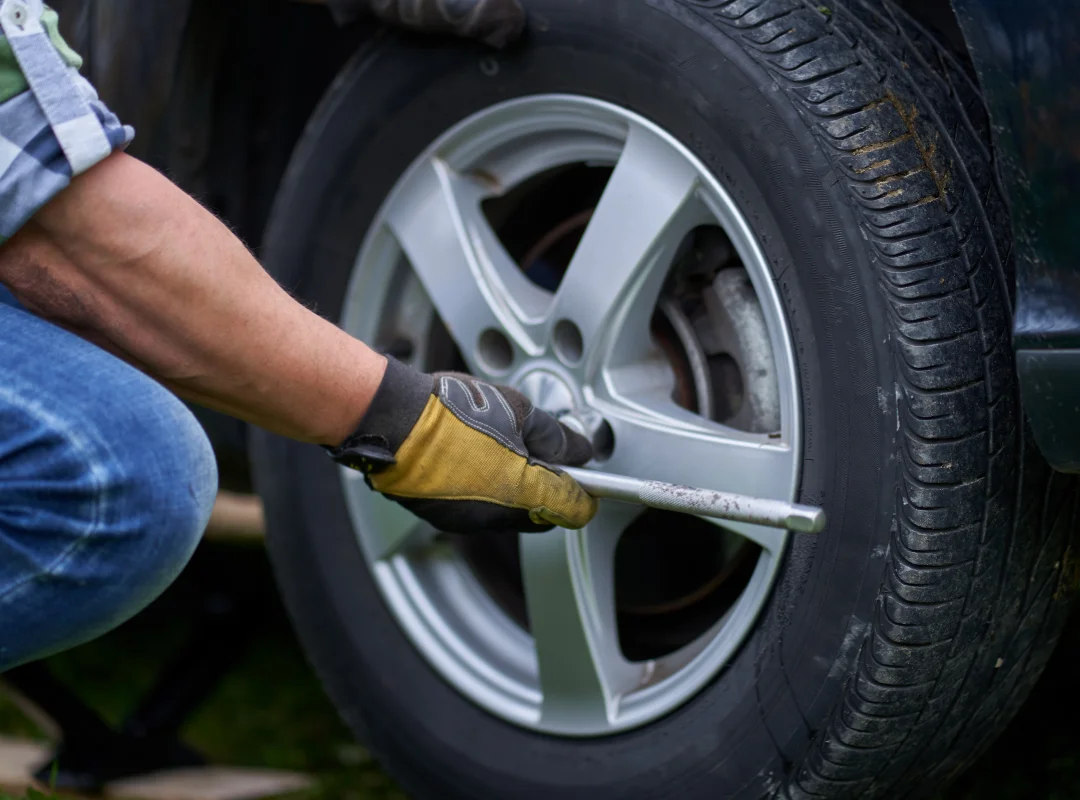
There’s a certain sound that every driver dreads: the sharp hiss of a punctured tire. You pull over, get out, and do a quick walk-around. Your eyes scan the tread, looking for a nail or screw. But then you see it—the damage isn’t in the tread at all. It’s a gash, a puncture, or a nasty scrape on the sidewall.
Your first thought might be, “Can’t I just patch it?” It’s a fair question. A patch for a tread puncture is a common, inexpensive fix. But when it comes to the sidewall, the rules of the game change completely. So, can you patch the sidewall of a tire?
The straightforward and safety-first answer is no. Industry-wide safety standards from organizations like the U.S. Tire Manufacturers Association (USTMA) are crystal clear: a puncture in the tire sidewall or shoulder is not repairable. But why is this the case? It’s not just a scheme to sell more tires. It comes down to the unique physics and construction of a tire. Let’s dive into the specifics.
The Big Three Reasons Sidewall Repairs Are Unsafe
When tire shops refuse to patch a sidewall, they are following established safety protocols backed by decades of research. Here are the core reasons why it’s a terrible idea.
1. Constant Flexing and Stress
Imagine trying to put a rigid bandage on your knuckle. Every time you bend your finger, the edges of the bandage would peel up. A tire patch on a sidewall faces a similar, but much more extreme, problem. The sidewall flexes millions of times over the life of a tire. A patch, which is essentially a plug and a reinforced piece of rubber bonded to the tire, simply cannot withstand this level of movement.
The results? The patch will almost certainly fail. The bond will break down, leading to a slow leak at best, or a catastrophic, high-speed blowout at worst. Professional repair patches are designed to be applied to the stable, non-flexing inner liner of the tread area. They just aren’t built for the dynamic environment of the sidewall.
2. Lack of Structural Support
The tread area of a tire has a network of steel belts underneath the rubber. These belts provide a strong, stable foundation for a patch to adhere to. They prevent the damaged area from stretching and help contain the repair.
The sidewall has none of this. It has radial body plies (cords) that run from bead to bead, but it lacks the heavy-duty steel belt reinforcement. When you puncture the sidewall, you sever these crucial structural cords. A patch does nothing to restore that lost structural integrity. You’ve essentially created a permanent weak spot in the tire’s skeleton. This weak spot is highly susceptible to forming a bulge or bubble, which is a clear sign of impending tire failure.
3. Heat Buildup
Tires get hot during operation, and the sidewall is where much of that heat is dissipated. A patch, being an extra layer of rubber, acts as an insulator. It traps heat in that one spot. Excessive heat is a tire’s worst enemy. It degrades the rubber and the bonding agents in the patch, accelerating its failure. The combination of flexing and heat buildup makes a sidewall patch a ticking time bomb.
What Does the Tire Industry Say? The “Repairable Area”
You don’t have to take our word for it. Every major tire manufacturer and safety organization defines a very specific “repairable area” on a tire.
The USTMA guidelines state that a puncture can only be repaired if it meets all of the following criteria:
- The puncture is 1/4 inch (6mm) or smaller in diameter.
- The puncture is located only within the tread area.
- The puncture is not in the shoulder or sidewall. The shoulder is the curved area where the tread transitions to the sidewall.
This repairable zone is often visualized as the central 75% of the tread width. Any damage outside of this zone is deemed non-repairable.
Here’s a simple breakdown of what can and can’t be fixed.
| Damage Location & Type | Repairable? | Why? |
| Nail puncture (<1/4″) in center tread | Yes | Located in the stable, steel-belted, repairable area. |
| Cut or gash in the sidewall | No | Constant flexing, lack of structural support, and heat buildup make repair unsafe. |
| Puncture on the tire’s shoulder | No | This area experiences high stress and flexing during turns. |
| Bulge or bubble on the sidewall | No | This indicates internal structural damage. The tire is already compromised. |
| Large puncture (>1/4″) in tread | No | The damage is too extensive for a standard plug-and-patch to seal safely. |
| Previous, improper repair (e.g., plug only) | No | A proper repair involves dismounting the tire and using a patch/plug combo from the inside. |
The Myth of the “Magic” Sidewall Patch
A quick search online might show you some DIY kits or videos claiming to show how to patch a sidewall. These should be avoided at all costs. These are temporary, off-road, or emergency-use-only solutions, and they are incredibly dangerous for a passenger vehicle on a public road.
Using one of these kits and driving at highway speeds is gambling with your safety and the safety of others. The risk of a blowout is astronomically high. For example, a 2018 study by the National Highway Traffic Safety Administration (NHTSA) attributed over 700 fatalities annually to tire-related crashes. A failed sidewall repair puts you at a much higher risk of becoming part of that statistic.
So, What Are Your Options for a Damaged Sidewall?
If you’ve confirmed the damage is on the sidewall, a repair is off the table. Your only safe option is to replace the tire. But this brings up another important question: do you need to replace just one tire, or more?
Replacing a Single Tire
If your tires are relatively new (with less than about 25% tread wear), you can often get away with replacing just the one damaged tire. It should be the exact same brand, model, and size as your other three.
Replacing Two Tires
If your tires have more significant wear, it’s best to replace two tires—the damaged one and the other tire on the same axle (front or rear). This is because a significant difference in tread depth between the left and right tires can cause handling instability, pulling, and premature wear on your vehicle’s suspension and differential. A difference of more than 2/32″ to 4/32″ is generally the cutoff.
Replacing All Four Tires (AWD Vehicles)
If you drive an All-Wheel Drive (AWD) vehicle, you will likely need to replace all four tires. AWD systems are highly sensitive to differences in tire circumference. A new tire has a larger circumference than a worn one.
This mismatch can force the AWD system to constantly engage, leading to binding and expensive damage to the drivetrain components like the center differential or transfer case. Some manufacturers, like Subaru and Audi, have very strict tolerances, often allowing no more than a 2/32″ difference in tread depth across all four tires.
Final Thoughts: Safety Over Savings
It can be frustrating to hear that a small hole in your tire means you have to spend hundreds of dollars on a replacement. But when it comes to tire sidewalls, the conclusion is non-negotiable. The science of tire dynamics—flex, stress, and heat—makes it impossible to perform a permanent, safe repair.
Don’t take the risk. A failed sidewall repair can lead to a sudden loss of control, putting you, your passengers, and everyone else on the road in danger. The industry standards are there for a reason: to keep you safe.
So, if you find yourself with a punctured sidewall, bite the bullet. Replace the tire. It’s the only choice that guarantees peace of mind and, more importantly, your safety on the road. Better to replace a tire than to risk replacing a car—or worse.
No Comment Yet! You can post first response comment.